Artificial intelligence has quickly become one of the biggest investment themes of the decade. While much of the attention has focused on semiconductor companies and AI software developers, one of the biggest beneficiaries could be a far less glamorous commodity: copper.
Often referred to as the "metal of electrification," copper is essential to modern infrastructure. Every data center, power grid, electric motor, and networking system relies heavily on copper because of its excellent electrical conductivity and durability. As AI adoption accelerates, demand for this critical metal is expected to rise sharply, creating a potentially bullish outlook for copper prices over the coming years.
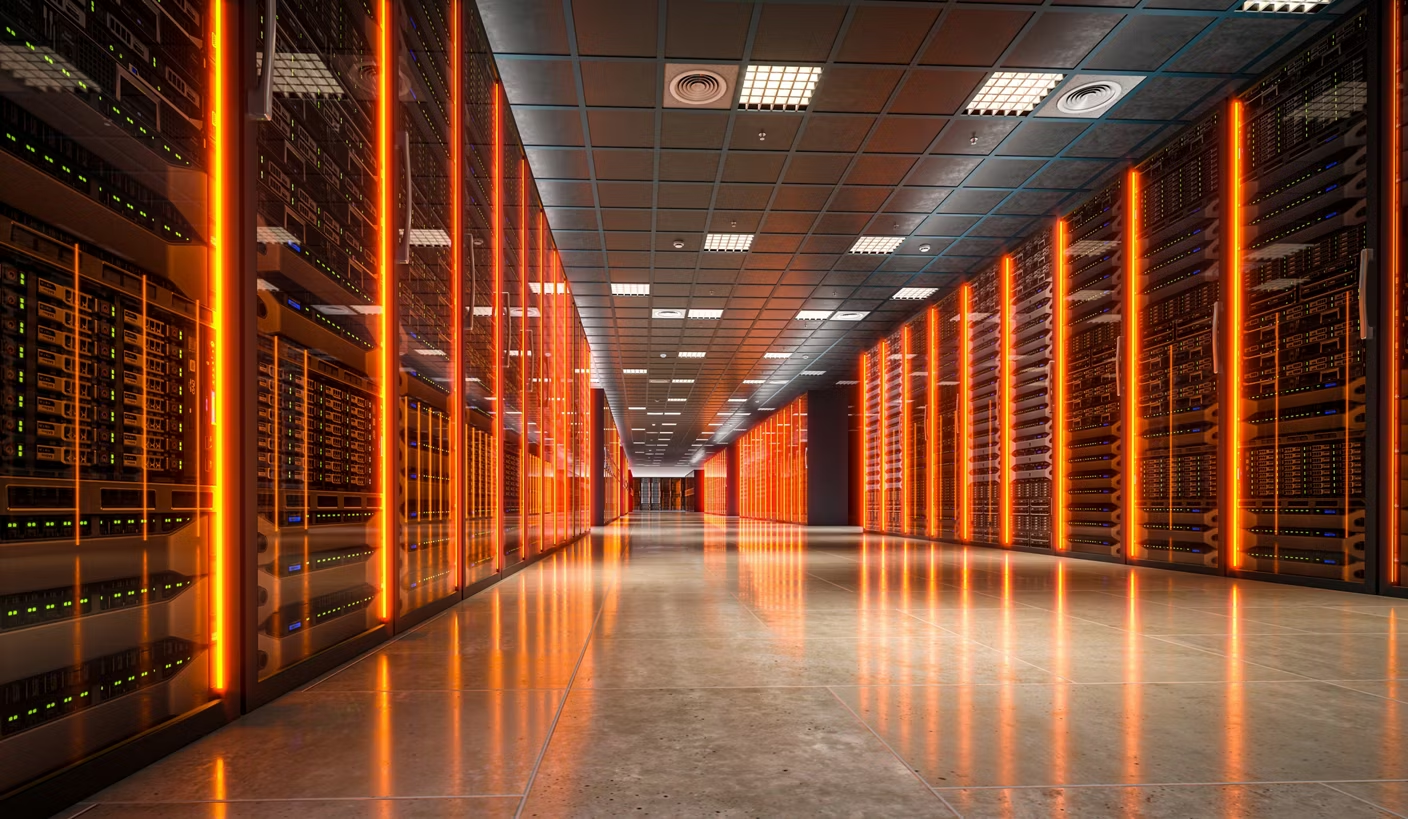
The AI revolution isn't just about building smarter software - it requires enormous amounts of physical infrastructure. Companies are investing hundreds of billions of dollars into constructing AI data centers capable of training and running increasingly sophisticated models. These facilities require vast amounts of electrical wiring, transformers, cooling systems, and networking equipment, all of which contain significant quantities of copper.
The electricity needed to power AI is another major driver of demand. Advanced AI models consume far more energy than traditional computing workloads, forcing utilities to expand power generation and modernize aging electricity grids. Every new transmission line, substation, and transformer requires large volumes of copper, making the metal a key component of the energy infrastructure needed to support AI growth.
Beyond data centers, the broader electrification of the global economy continues to strengthen copper's long-term outlook. Electric vehicles require substantially more copper than conventional gasoline-powered cars, while renewable energy projects such as wind farms and solar installations also consume large amounts of the metal. AI is adding another layer of demand to an already tightening market, increasing concerns that supply may struggle to keep pace.
Unfortunately, increasing copper production is far easier said than done. Developing a new copper mine can take well over a decade due to permitting requirements, environmental approvals, financing challenges, and construction timelines. Many of the world's largest copper mines are also aging, with ore grades gradually declining, making extraction more difficult and expensive. This limited ability to rapidly increase supply could create persistent shortages if demand continues to accelerate.
Analysts have warned that the copper market may face structural deficits later this decade as consumption outpaces new production. If those forecasts prove accurate, higher prices may be necessary to encourage additional mining investment. Commodity markets have historically experienced significant price increases when long-term supply constraints collide with rapidly growing demand, and copper could be entering a similar environment.
Investors are increasingly viewing copper as more than just an industrial metal. Instead, it is becoming a strategic resource underpinning multiple global megatrends, including artificial intelligence, renewable energy, electric vehicles, and the modernization of electrical infrastructure. Unlike many technology investments that depend on consumer preferences or software adoption, copper demand is tied directly to the physical assets required to build the future economy.
Of course, no investment is without risks. A global economic slowdown could temporarily reduce industrial demand for copper, while weaker construction activity may put downward pressure on prices in the short term. Technological improvements could also reduce copper intensity in certain applications, although there are currently few cost-effective alternatives that match its electrical performance across such a broad range of uses.
For long-term investors, however, the bigger picture remains compelling. AI is transforming industries across the world, but behind every breakthrough lies a vast network of servers, power cables, substations, and electrical infrastructure. None of it can function without copper. As investment in AI infrastructure continues to accelerate, the metal may become one of the most important—and overlooked—beneficiaries of the technological revolution.
While companies designing AI chips may dominate the headlines, copper could prove to be one of the decade's quiet winners. If the buildout of AI infrastructure unfolds as many experts expect, demand for copper is likely to remain strong for years to come, positioning the metal at the center of one of the most significant investment themes of the modern era.

Is SpaceX Overvalued? A Look at the Company's Sky-High Valuation


.avif)
.avif)
.avif)

%2520copy.avif)